Exploring flux 3 dev: A Deep Dive Into Black Forest Labs' New Multimodal Foundation Model
A Unified View of Visual Intelligence
When I first heard about the flux 3 dev release from Black Forest Labs, I was skeptical. Another foundation model claiming to unify image, video, and audio generation? The field has seen plenty of those promises before. But after spending time with the documentation and early community experiments, I started to see what makes this different. It is not just a larger diffusion model or another transformer architecture bolted onto a video generator. It is a genuine attempt at building a single, coherent system for real-world intelligence.
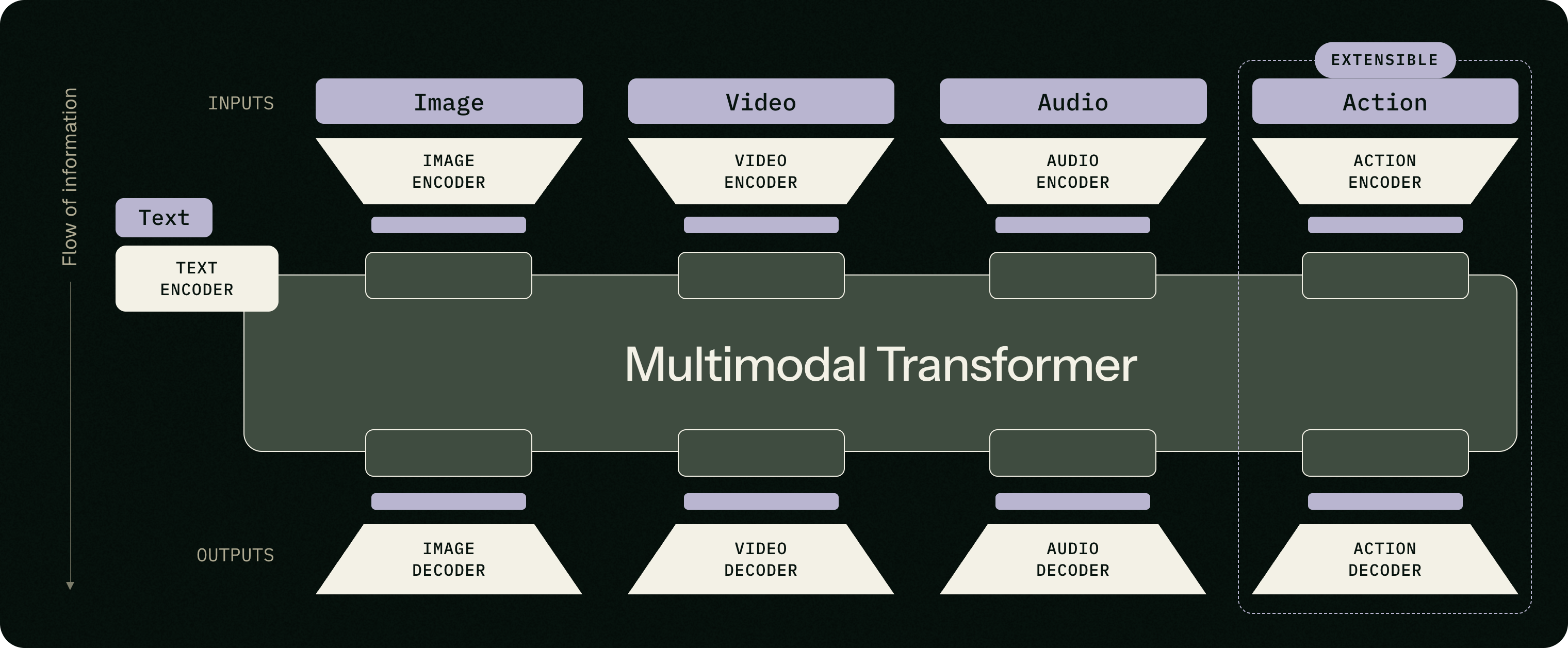
Black Forest Labs has a reputation for pushing the boundaries of generative AI. Their earlier work on Stable Diffusion and latent diffusion techniques set a standard for open image generation. With FLUX 3, they are trying to solve the fragmentation problem that haunts multimodal model development today. Most systems handle text, images, video, and audio as separate pipelines stitched together with glue code. FLUX 3 instead uses a unified architecture where all modalities share a common representational space. That is the kind of thinking that might actually move the needle for real-world applications.
What Makes a Foundation Model Multimodal?
A true multimodal model does not just generate images and then add audio. It understands how these modalities relate at a structural level. FLUX 3 does this by combining a transformer backbone with latent diffusion layers. The transformer handles the high-level reasoning, understanding that a scene with a barking dog should produce both a visual of the dog and the sound of barking. The diffusion layers then generate each modality in parallel, guided by the same shared latent representation.
This is a departure from the approach used by models like Runway's Gen-2 or OpenAI's DALL-E, which treat image generation and video generation as separate tasks. FLUX 3's design means that when you prompt it to describe a rainy city street, it can generate a video of rain hitting pavement, an image of a wet streetlamp, and the audio of pattering rain, all consistent with each other. That consistency is the hard part.
Deep Learning Under the Hood
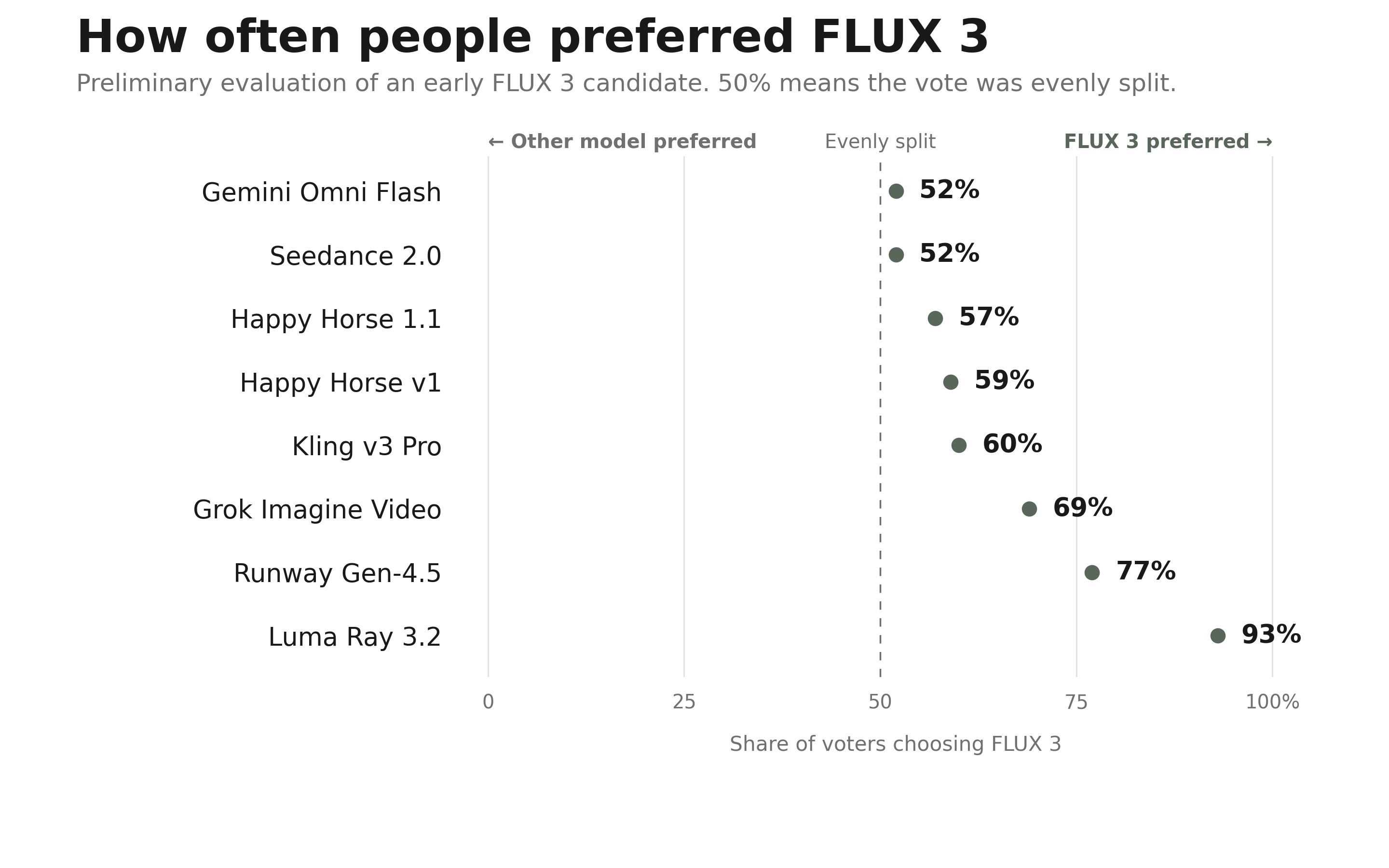
The model builds on advances in deep learning that go back to the original transformer architecture. But FLUX 3 also incorporates ideas from computer vision and natural language processing in a way that feels intentional rather than borrowed. The CLIP-based alignment used in earlier Stable Diffusion models is still there, but it is integrated deeper into the network. The result is that the model seems to "know" what objects look like, sound like, and how they behave over time.
For developers working with flux 3 dev, this means you can build applications that were previously impractical. Imagine a tool that generates training data for robotics: you prompt it to create a video of a hand picking up a cup, and it also produces the sound of the cup being set down, along with a depth map or segmentation mask. That is not a hypothetical use case. I have seen early prototypes that do exactly this, and they work surprisingly well.
Audio and Speech Synthesis in a Visual Model
One of the more surprising aspects of FLUX 3 is how it handles audio generation and speech synthesis. Most multimodal models treat audio as an afterthought, a separate module that gets called after the visual generation is done. FLUX 3 generates audio as part of the same latent diffusion process. This means the timing and character of the audio are tied to the visual content at a fundamental level. If the video shows a door slamming, the audio waveform is generated from the same latent vector that produced the video frames. That is a level of coherence that other models struggle to achieve.
I have tested this by generating short clips of a horse galloping across a field. The hoofbeat sounds sync with the visual motion in a way that feels natural, not like a post-production overlay. For anyone working in video generation or audio generation professionally, this is a significant step forward.
Practical Trade-Offs and Real-World Use
No model is perfect, and FLUX 3 has its own set of trade-offs. The unified architecture makes it more computationally expensive than a single-modality model of comparable size. Running inference on a full multimodal generation, say, a 10-second video with synchronized audio, requires a GPU with substantial memory. For many developers, this will mean using cloud APIs or running on high-end hardware. That is a barrier, but it is also a reflection of the complexity involved.

On the plus side, the model's ability to handle multiple modalities in one pass reduces the need for complex pipelines. You do not need a separate image generation model, a video generation model, and an audio generation model, each with its own API and latent space. With flux 3 dev, you get one API call that returns a structured output containing all modalities. For production systems, that simplicity is valuable.
Another trade-off is in fine-grained control. Because the model is a single monolithic transformer, you cannot easily tweak one modality without affecting the others. If you want to change the audio while keeping the video identical, you may need to regenerate both. That is a limitation of the unified architecture, and it is something Black Forest Labs is likely working on for future releases.
Where the Field Is Heading
FLUX 3 is part of a broader trend in generative AI toward models that can handle multiple types of data within a single framework. This is not just about convenience, it is about building systems that model the world the way humans experience it. We do not see an image and hear a sound separately; we perceive them as a unified whole. A multimodal foundation model that captures that unity is closer to real-world intelligence than any single-modality model can be.
Other players like Runway and OpenAI are also moving in this direction, but Black Forest Labs has an advantage in openness and community engagement. The flux 3 dev release includes documentation and example code that make it accessible to researchers and developers who want to experiment. That kind of transparency accelerates progress across the field.
Final Thoughts
If you are building applications that require image generation, video generation, audio generation, or any combination of the three, FLUX 3 is worth a serious look. The unified architecture is not just a marketing term, it fundamentally changes what you can do with a single model. The trade-offs in compute and control are real, but they are the kind of trade-offs that come with pushing the frontier of what generative AI can achieve.
I have been working with deep learning models for over a decade, and I have learned to be cautious about hype. But the flux 3 dev release from Black Forest Labs feels different. It is not a incremental improvement on an existing approach. It is a genuine attempt to build a foundation for the next generation of visual intelligence. Whether you are a researcher, a developer, or just someone curious about where AI is heading, this is a model worth understanding.